SC — INSIGHTN°50
SoundInsightN°51
01
Ten-year US Treasury yields have reached their highest level since 2002. Inflation, economic resilience and a higher term premium are all contributing.
02
Wider spreads on French government bonds show how closely investors are scrutinising sovereign debt sustainability.
03
Corporate earnings continue to grow strongly. Yet lofty expectations leave little room for disappointment.
Bonds
Overview
Interest Rates
Credit Spreads
UnattractiveAttractive
Equities
Overview
+1
Equity Risk Premium
Leading Indicators
Risk Index
+2
UnattractiveAttractive
Posted 10/26/2026 by Christian Luchsinger
Higher Rates, Higher Stakes
The yield on ten-year US Treasuries briefly exceeded 5.3% in October, its highest level since 2002. At the same time, the spread between ten-year French and German government bonds has more than doubled since late August.
Higher interest rates generally weigh on equities. They raise companies’ financing costs, reduce the present value of future earnings and make fixed-income investments more attractive. Yet stock markets have proved remarkably resilient. Their main source of support is robust corporate earnings growth. The current reporting season will test whether that growth can justify the higher level of interest rates.
More than an inflation problem
Several forces are driving the latest rise in US yields. Inflation has proved more persistent than expected: consumer prices rose 3.7% year on year in September, while producer prices jumped 1.3% in a single month, the biggest increase since March 2022. Purchasing managers’ surveys also point to a resilient economy. Against this backdrop, futures markets are pricing in roughly three additional 25-basis-point Fed rate increases by autumn 2027.
Beyond inflation and growth, a third factor is gaining importance: the term premium. This is the extra return investors require for committing capital over a long period and bearing the risk of unexpected changes in inflation and interest rates. The greater the uncertainty, the higher the yield they demand.
The US fiscal outlook illustrates why these risks matter. The Congressional Budget Office (CBO) projects that federal debt held by the public will rise from 101% of GDP in 2026 to 120% by 2036. Annual net interest costs are expected to more than double, from around USD 1 trillion to USD 2.1 trillion. That would lift the interest bill from 3.3% to 4.6% of GDP, accounting for almost one dollar in every five of federal spending.
Rising debt and substantial refinancing needs add to uncertainty over long-term funding conditions. Model-based estimates of the term premium on ten-year US Treasuries have also risen, reaching close to one percentage point in mid-October.
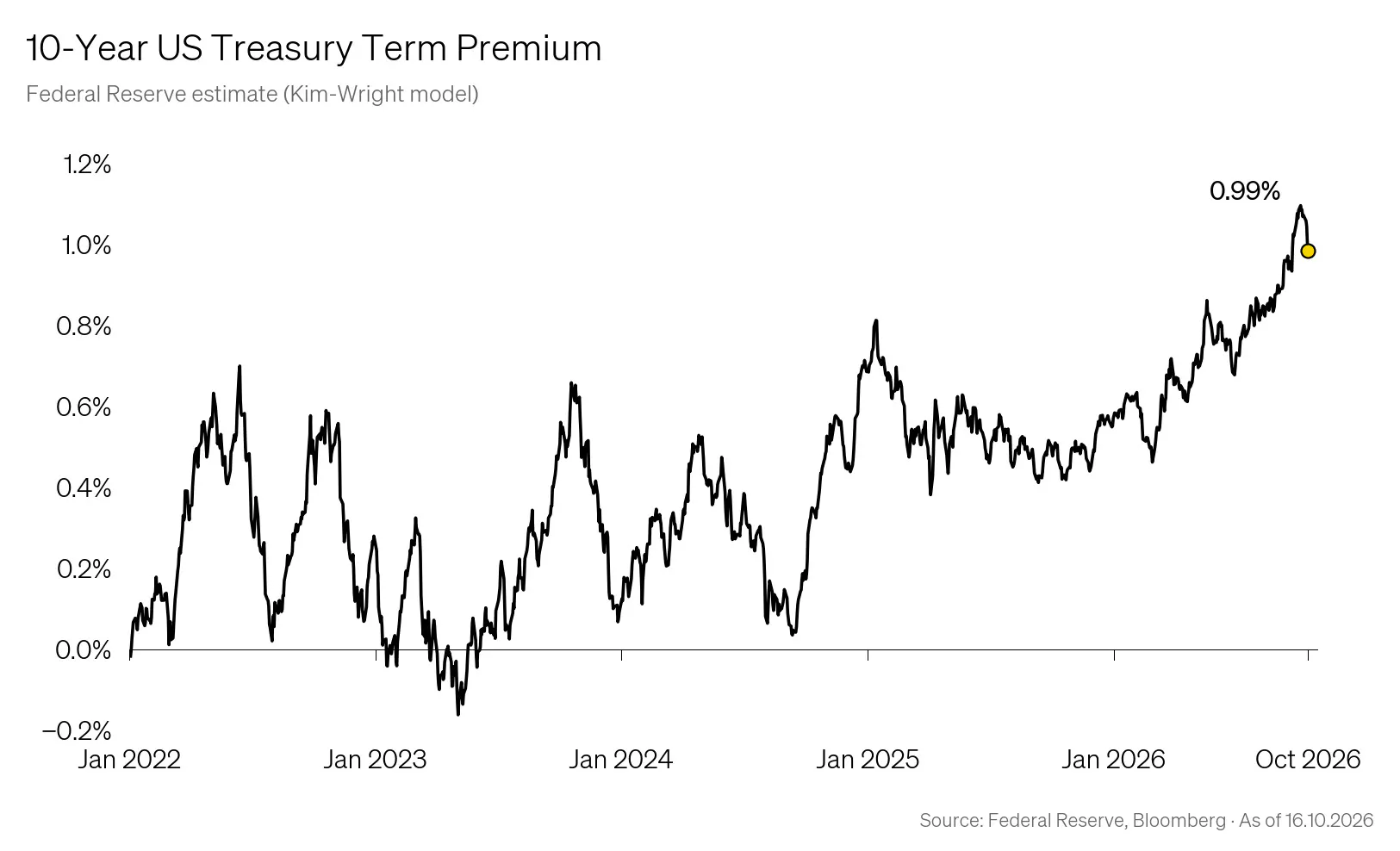
Long-term yields are therefore not rising solely in response to the latest inflation data. Stronger growth expectations and greater compensation for long-term risks also play a part. The result is higher financing costs for governments and businesses alike.
France faces a loss of confidence
France shows how quickly bond markets can reprice fiscal risk. Since late August, the yield spread between ten-year French government bonds and German Bunds has widened from 78 to around 165 basis points. Investors now demand more than twice the additional yield they required just a few weeks ago.
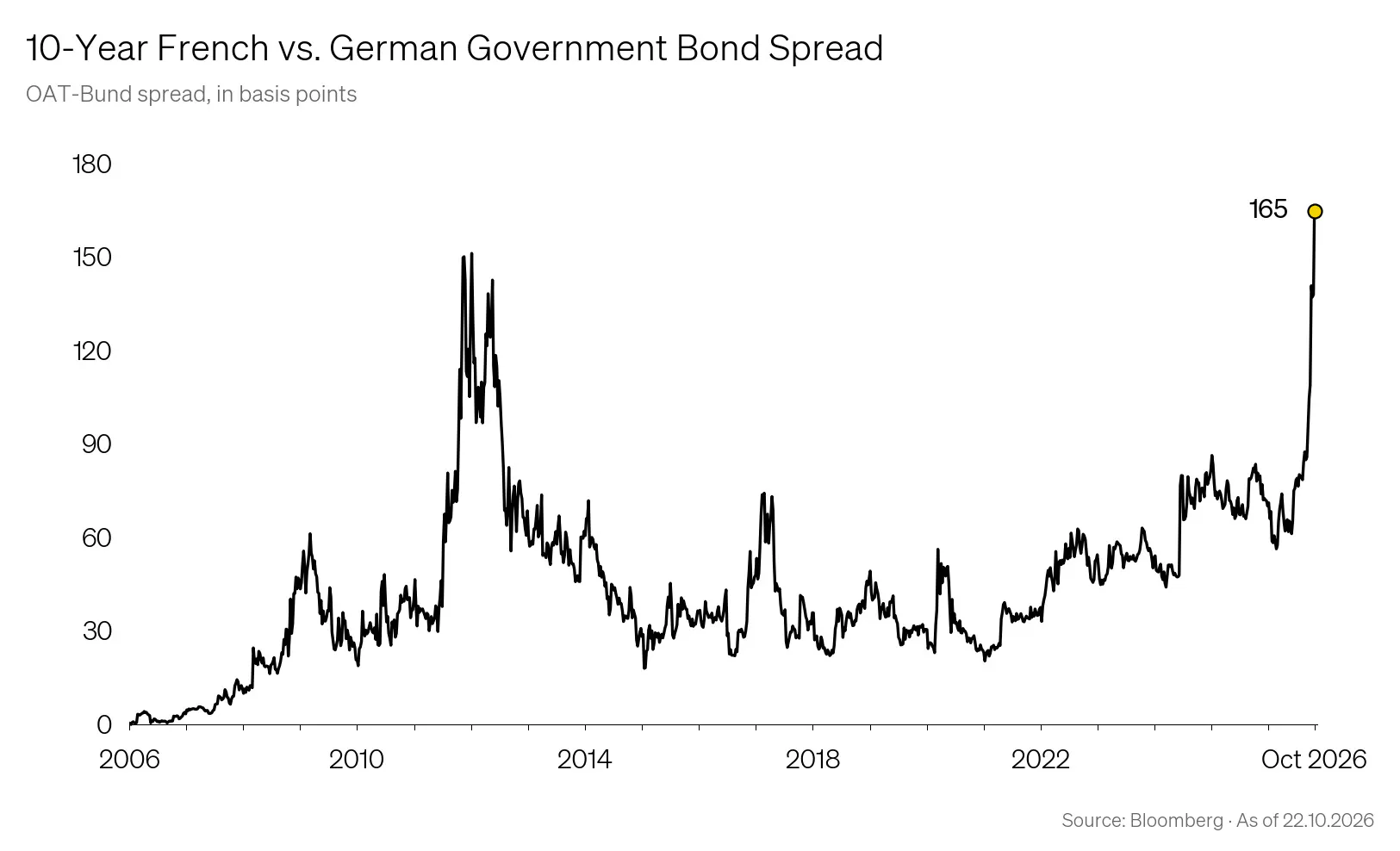
The underlying problem is structural. France has run primary deficits in almost every year for decades: even before interest payments, government expenditure exceeds revenue. The overall budget deficit is projected at 5.4% of GDP in 2026, while public debt is expected to reach roughly 122% of GDP in 2027.
Political tensions make a credible fiscal consolidation plan harder to deliver. With presidential elections approaching in spring 2027, far-reaching reforms are especially difficult to enact. Meanwhile, higher borrowing costs increase the interest burden on an already stretched budget.
[MOODY’S: INSERT 23 OCTOBER 2026 RATING DECISION]
[Add rating and outlook, key rationale and any market reaction. Previous rating: Aa3, negative outlook.]
There is little sign so far of a repeat of the euro-area debt crisis of 2011. French banks hold a much smaller share of domestic sovereign bonds than banks in the countries at the centre of that crisis. The spillover to other euro-area government bond markets has also remained limited. Even so, France demonstrates that major developed economies can no longer take investors’ confidence for granted.
Earnings need to deliver
While bond markets are demanding a higher term premium, an unusually strong earnings cycle continues to support equities. Analysts expect S&P 500 earnings to rise by around 30% year on year in the third quarter. It would be the third consecutive quarter of growth above 25%.
The reporting season has started on a solid footing: by mid-October, 84% of companies that had reported beat earnings expectations. The average surprise was just 2.6%, however, well below the five-year average of 7.5%.
The bar is therefore high. Investors have become accustomed to positive earnings surprises, so good results alone may no longer be enough to lift share prices. Growth also remains concentrated in a handful of sectors. Semiconductor companies are benefiting from the AI investment boom, while energy producers are supported by elevated commodity prices.
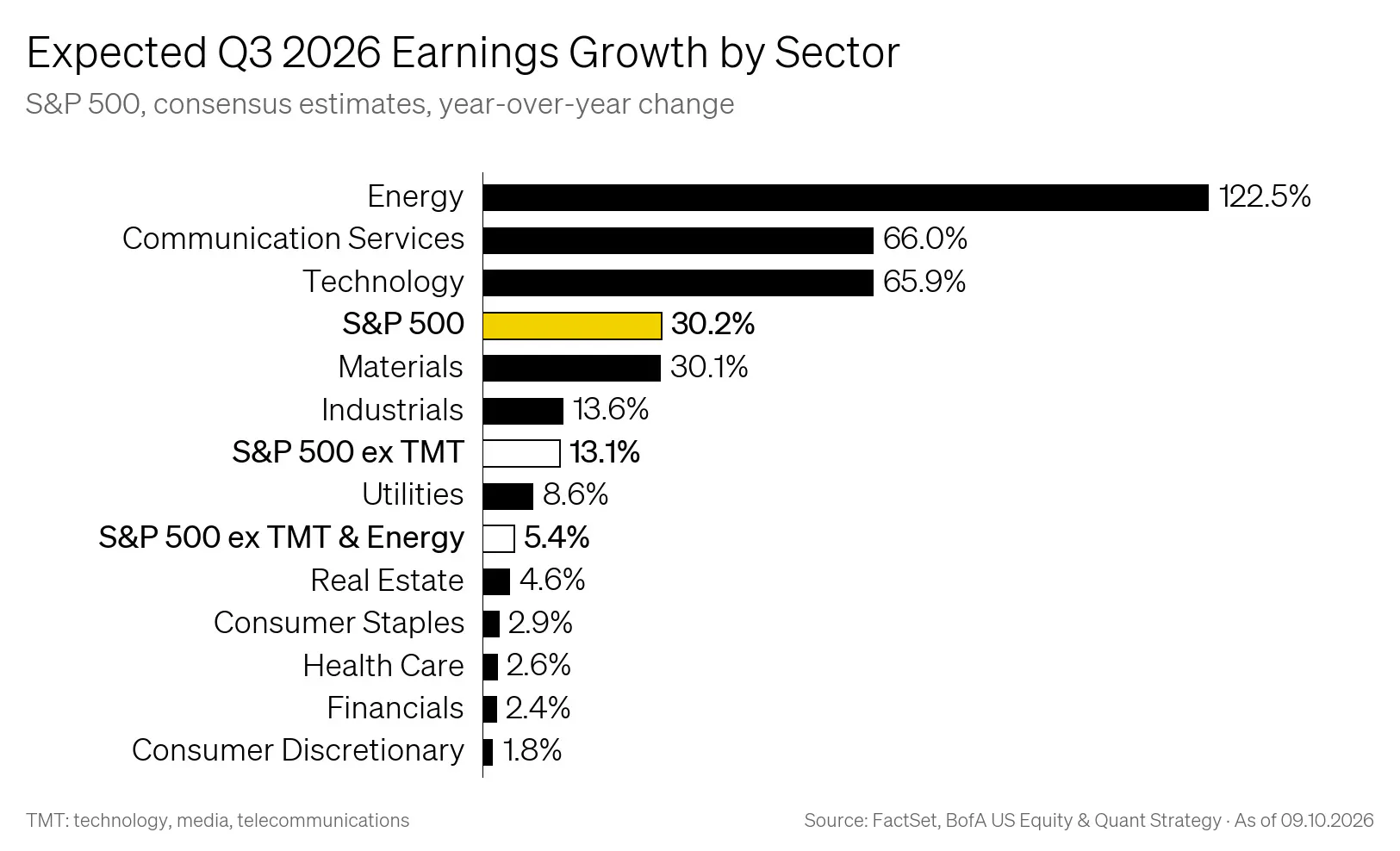
Attention is increasingly turning to 2027. In particular, the vast sums committed to artificial intelligence must begin to translate into sustainable returns. At the same time, higher energy, materials and financing costs are putting pressure on margins.
This matters all the more when bond yields are elevated. Equities can remain attractive if profits grow fast enough, but rich valuations and higher interest rates leave less room for disappointing results.
The US midterm elections on 3 November introduce another source of uncertainty. Changes in the balance of power in Congress could alter the administration’s room for manoeuvre and trigger short-term volatility. Over the longer term, however, earnings are likely to matter more for equities than the election outcome.
SoundCapital positioning
Economic resilience and corporate earnings still support the case for equities. At the same time, higher yields and demanding valuations have increased vulnerability to setbacks. Investor sentiment offers some relief: the earlier extremes of optimism have moderated. Bank of America’s Bull & Bear Indicator fell from 8.1 to 7.4, ending its previous sell signal. Investors, however, remain far from pessimistic.
Against this backdrop, we are raising our tactical equity assessment from underweight to neutral. Our equity holdings remain unchanged. We are also maintaining our previously communicated put-option hedges for now, given the events ahead.
Within equities, we continue to favour emerging markets and companies benefiting from investment in artificial intelligence and energy infrastructure. In fixed income, we prefer high-quality corporate issuers and remain underweight high-yield bonds. Precious metals continue to provide diversification against geopolitical and fiscal risks.
The strong earnings cycle argues against retreating from equities. At the same time, higher interest rates and political uncertainty call for disciplined risk management. Our neutral equity stance, alongside continued downside protection, reflects both considerations.
As the cost of capital rises, so does the bar for putting it to work.
Appendix & Disclaimer
Mit SoundInsights beurteilen wir systematisch und konsistent die Aspekte, die für die Entwicklung der Finanzmärkte relevant sind. In der Folge können sich unsere Kunden auf eine rationale und antizyklische Umsetzung unserer Anlageentscheidungen verlassen.
- Konzentration auf das Wesentliche
Zinsniveau, Risikoaufschlag, Bewertung, Wirtschaftsentwicklung, Anlegerstimmung und -positionierung. Das sind die zentralen Faktoren. Sie entscheiden über den Erfolg an den Finanzmärkten. Besonders in turbulenten Zeiten, wenn die Versuchung besonders gross ist, irrational den Schlagzeilen hinterherzulaufen. - Vergleichbarkeit über Ort und Zeit
Die genannten Faktoren sind für alle Märkte und zu jeder Zeit gleichermassen relevant. Dies ergab sich aus einem strengen «Backtesting», welches sich rollend in die Zukunft fortsetzt. - Bündeln unserer kumulierten Anlageerfahrung
Unsere Stärke liegt in den langjährigen Erfahrungen unserer Partner und Principals. Genau diese Erfahrungen fassen wir zusammen und machen sie mittels SoundInsights anwendbar. - Transparenz
Durch die monatliche Publikation wissen unsere Kunden stets, wo wir im Anlagezyklus stehen und wohin die Reise an den Finanzmärkten geht.
Dieses Dokument wurde von Sound Capital AG («SoundCapital») zu Informations- und Marketingzwecken erstellt und ist einzig für die/den Empfänger:in bestimmt. Die darin enthaltenen Angaben wurden mit gebotener Sorgfalt zusammengestellt und stützen sich auf Quellen, die SoundCapital als zuverlässig erachtet. Für die Richtigkeit, Vollständigkeit und Zuverlässigkeit der Angaben kann jedoch keine Gewähr übernommen werden. Soweit gesetzlich zulässig, haftet SoundCapital nicht für Verluste oder Schäden, die aus der Verwendung dieser Informationen entstehen. Dieses Dokument ist weder als Angebot oder Aufforderung zum Kauf oder Verkauf von Finanzinstrumenten oder zum Abschluss einer Transaktion noch als Anlage-, Rechts- oder Steuerberatung oder persönliche Empfehlung zu verstehen. Es sollte nicht als alleinige Grundlage für einen Anlageentscheid dienen. Empfänger:innen sollten die Informationen unter Berücksichtigung ihrer persönlichen Situation, ihrer Anlageziele, ihrer finanziellen Verhältnisse und Bedürfnisse sowie der damit verbundenen rechtlichen, regulatorischen und steuerlichen Aspekte eigenständig beurteilen und bei Bedarf unabhängige fachliche Beratung beiziehen. Anlagen sind mit Risiken verbunden und können zu einem teilweisen oder vollständigen Verlust des investierten Kapitals führen. Ihr Wert und die daraus erzielten Erträge können schwanken und sind nicht garantiert. Vergangene Wertentwicklungen sind kein verlässlicher Indikator für zukünftige Ergebnisse. Prognosen, Projektionen, Schätzungen, Zielrenditen und andere zukunftsgerichtete Aussagen beruhen auf Annahmen, die sich verändern können, und bieten ebenfalls keine verlässliche Grundlage für die Beurteilung der zukünftigen Wertentwicklung. Die tatsächlichen Ergebnisse können erheblich von den dargestellten Erwartungen abweichen. Sofern nicht anders angegeben, beziehen sich die Informationen auf den im Dokument genannten Stichtag. Sie können jederzeit und ohne vorherige Ankündigung geändert werden. SoundCapital ist nicht verpflichtet, sie nachträglich zu aktualisieren oder zu überarbeiten. Dieses Dokument richtet sich nicht an Personen oder Rechtsträger in Jurisdiktionen, in denen seine Verbreitung, Veröffentlichung oder Verwendung gegen geltende Gesetze oder Vorschriften verstossen oder für SoundCapital eine Registrierungs- oder sonstige Pflicht begründen würde. Ohne vorherige schriftliche Zustimmung von SoundCapital darf das Dokument weder ganz noch teilweise vervielfältigt, verbreitet oder weitergegeben werden.
© 2026 Sound Capital AG. Alle Rechte vorbehalten.
Datenquelle: Bloomberg, UBS, BofA ML Research
SC — INSIGHT
SoundInsights™
SC — INSIGHTN°49
SC — INSIGHTN°48

SC — WWO01
PMA
What we offer
Portfolio Management
Asset management with a vision for long-term investment success
SC — WWO02
INA
What we offer
Investment Advisory
Solid advice for better-informed investment decisions
SC — WWO03
WMS
What we offer
Wealth Management Services
Comprehensive wealth management services for your financial future