SC — INSIGHTN°50
SoundInsightN°49
01
Governments are once again taking a more active role in capital markets
02
Rising long-term US yields are about more than inflation
03
Government borrowing and AI investment are competing for capital
Bonds
Overview
Interest Rates
Credit Spreads
UnattractiveAttractive
Equities
Overview
Equity Risk Premium
Leading Indicators
Risk Index
UnattractiveAttractive
Posted 8/25/2026 by Christian Luchsinger
The Price of Uncertainty
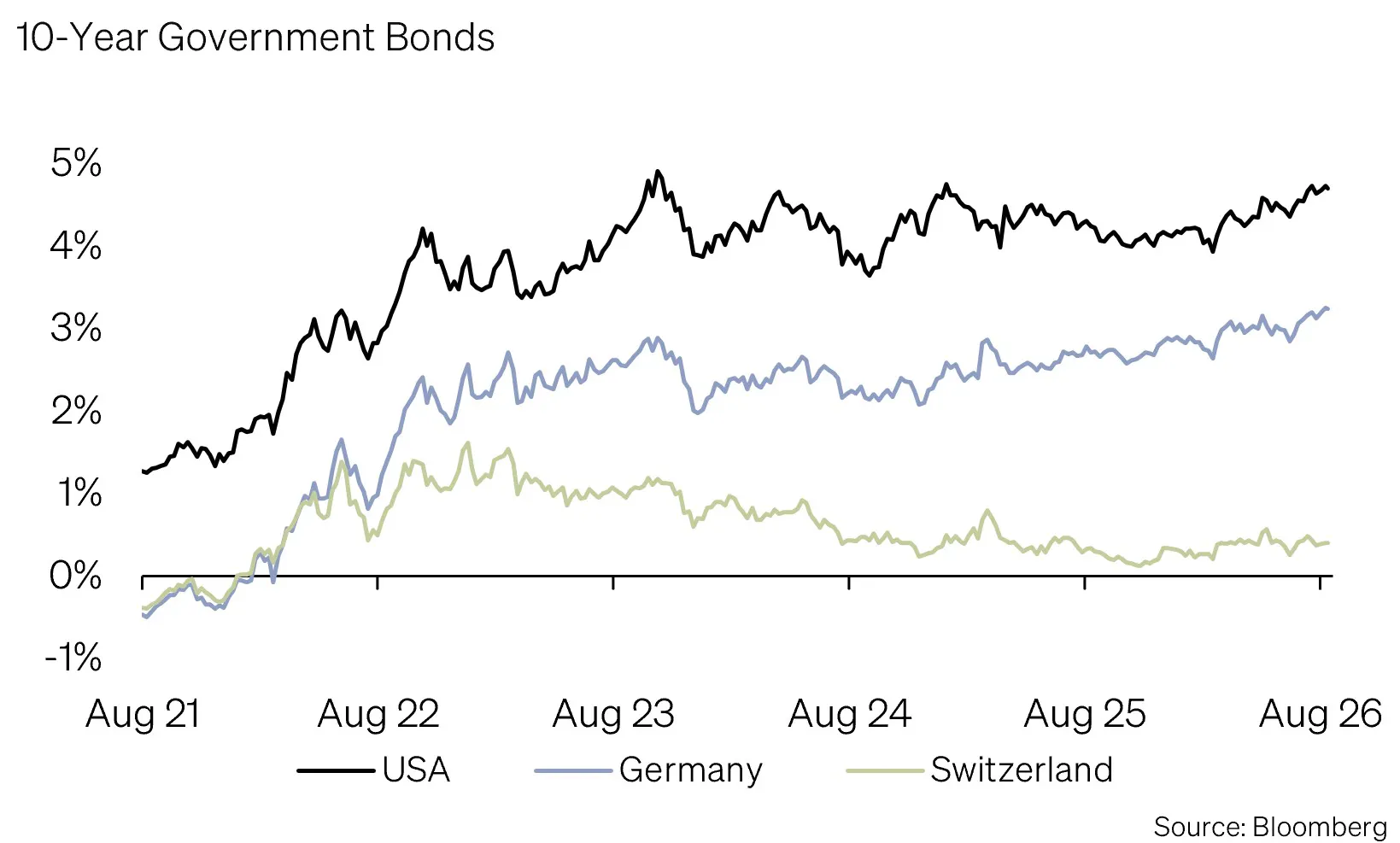
When finance ministries and central banks intervene in both the currency and the bond market within a matter of days, it is a signal worth noting. In late July, Japan and the United States acted jointly to stabilise the yen. In mid-August, the yield on 30-year US Treasuries rose to 5.33 percent, its highest level since 2007. Shortly afterwards, the US Treasury announced that it would at least double its buybacks of long-dated bonds.
At first glance, these look like two separate events. In substance, they share the same question: how much compensation do investors demand when public debt, monetary policy and capital requirements become harder to calculate? The answer is visible in higher long-term interest rates—the price of uncertainty.
Japan sits at the centre of this. With holdings of roughly USD 1.1 trillion, it is the largest foreign owner of US Treasuries. At the same time, the weak yen is putting pressure on the government. To support its own currency, Japan has to deploy dollars. Those dollars can come from its foreign exchange reserves—and therefore, indirectly, from sales of US Treasuries. The result is a tension: what stabilises the yen can add strain to the US bond market, precisely at a point when Washington’s funding costs are rising.
The latest measures worked, at least initially. The yen recovered and long US yields eased somewhat. More importantly, the interventions show how closely currency and bond markets are now intertwined—and how quickly policymakers respond to larger market moves.
More Than an Inflation Story
The rise in yields at the long end cannot be explained by inflation alone. While the yield on 30-year US Treasuries climbed to a 19-year high, long-term inflation expectations remained comparatively stable. The stronger impulse came from real interest rates and from a higher term premium.
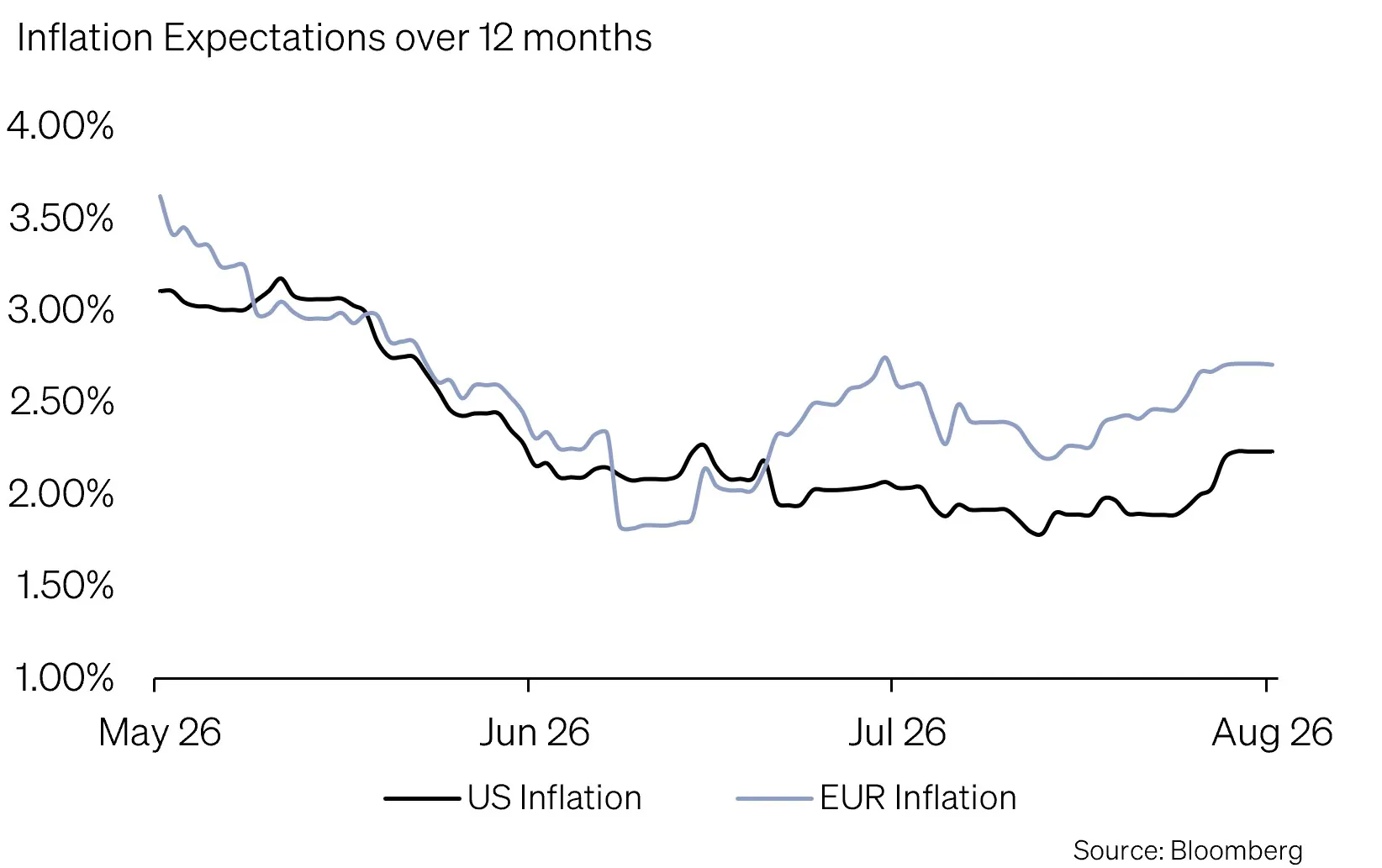
The term premium is the additional compensation investors demand for committing capital over long horizons. Anyone investing for ten, twenty or thirty years bears the risk that growth, inflation and monetary policy turn out differently from what is expected today. The greater that uncertainty, the higher the premium required. It is precisely this premium that has risen in recent months.
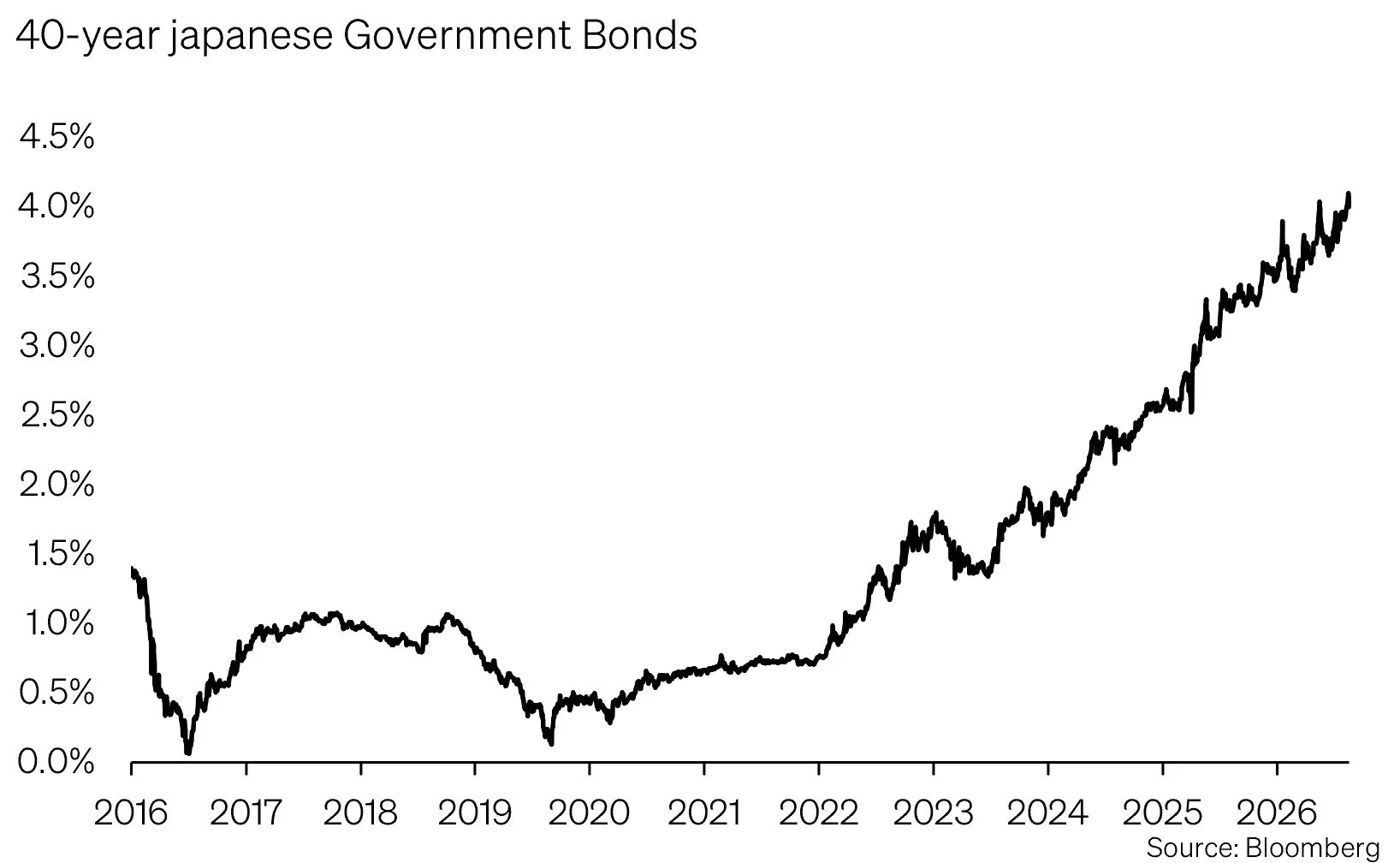
There are three main reasons for this. First, US federal debt has passed the USD 40 trillion mark. At the same time, the budget deficit is likely to run at just under six percent of economic output in 2026—despite a still solid economy. Funding needs therefore remain high.
Second, the buyer base in the US bond market has changed. Foreign central banks are less present as reliable long-term investors. Their place is increasingly taken by private investors, who are more sensitive to price and yield. A persistently high volume of issuance is thus meeting a more demanding source of demand.
Third, monetary policy offers less orientation than it once did. The Federal Reserve left policy rates unchanged at its most recent meeting but, under its new chair Kevin Warsh, refrained from giving clear signals on the path ahead. The wider the range of possible outcomes, the higher the risk premium on long maturities tends to be.
The State as an Active Market Participant
The recent interventions make clear that governments are once again responding more directly to stress in capital markets.
In late July, Japan and the United States intervened jointly in the currency market for the first time since 2011. Japan is estimated to have deployed around USD 87 billion over two days to buy yen.
The US contribution was smaller in financial terms but significant politically: by selling euros and buying yen, Washington supported the stabilisation of the Japanese currency and signalled that a further disorderly depreciation of the yen was unwelcome. Notably, the ECB was not consulted beforehand—an unusual intervention in a third currency.
For situations of this kind, foreign central banks also have access to the Federal Reserve’s FIMA Repo Facility. Through this facility they can pledge US Treasuries temporarily in exchange for dollars instead of selling the securities outright in the market. That can bridge liquidity shortages and limit additional selling pressure on Treasuries.
The response in the bond market followed shortly afterwards. Between September and early November, the US Treasury is increasing its buybacks of government bonds with maturities of ten to thirty years. The maximum volume per operation rises from USD 2 billion to at least USD 4 billion.
One distinction matters here: these buybacks are not quantitative easing, that is, not a bond-purchase programme run by the Federal Reserve. The Treasury cannot create central bank money. It repurchases older, less liquid bonds and funds this through new issuance, often at shorter maturities. This improves the tradability of long-dated bonds while shifting part of the interest rate risk to shorter maturities. Put simply: the government is trying to relieve pressure at the long end without creating new money.
In the short term, the buybacks can improve market liquidity and ease the pressure on long maturities. They do not solve the structural problem: neither the deficit nor the high funding requirement disappears. There is also a question of credibility. If the Treasury increasingly responds to individual market moves, investors may read that as a sign of growing vulnerability—and demand an even higher risk premium over the longer run.
Growth Needs Capital
It would be too narrow, however, to read the rise in yields solely as a consequence of fiscal strain. A growing, investment-intensive economy also lays claim to capital.
The US economy grew by 1.5 percent in the second quarter in real, annualised terms. The pace was moderate but broadly supported, driven by consumption, investment and exports. At the same time, corporate earnings remain very robust, as described in SoundInsights 48.
One important driver is the build-out of artificial intelligence. The current investment cycle is only around two years old and has long since extended beyond semiconductors. Data centres require power supply, grid infrastructure, cooling, industrial automation and additional construction capacity. This makes the AI cycle broader and more capital-intensive than earlier technology phases.
Real investment in IT equipment in the United States is currently growing by 25 to 30 percent year on year. At the same time, large technology groups have raised around USD 200 billion in the bond market this year. That is equivalent to roughly a quarter of net issuance of long-dated US Treasuries over the same period, all of which has to be absorbed by private investors. Technology companies are therefore no longer only an equity story; they have become a relevant factor in global credit markets as well.
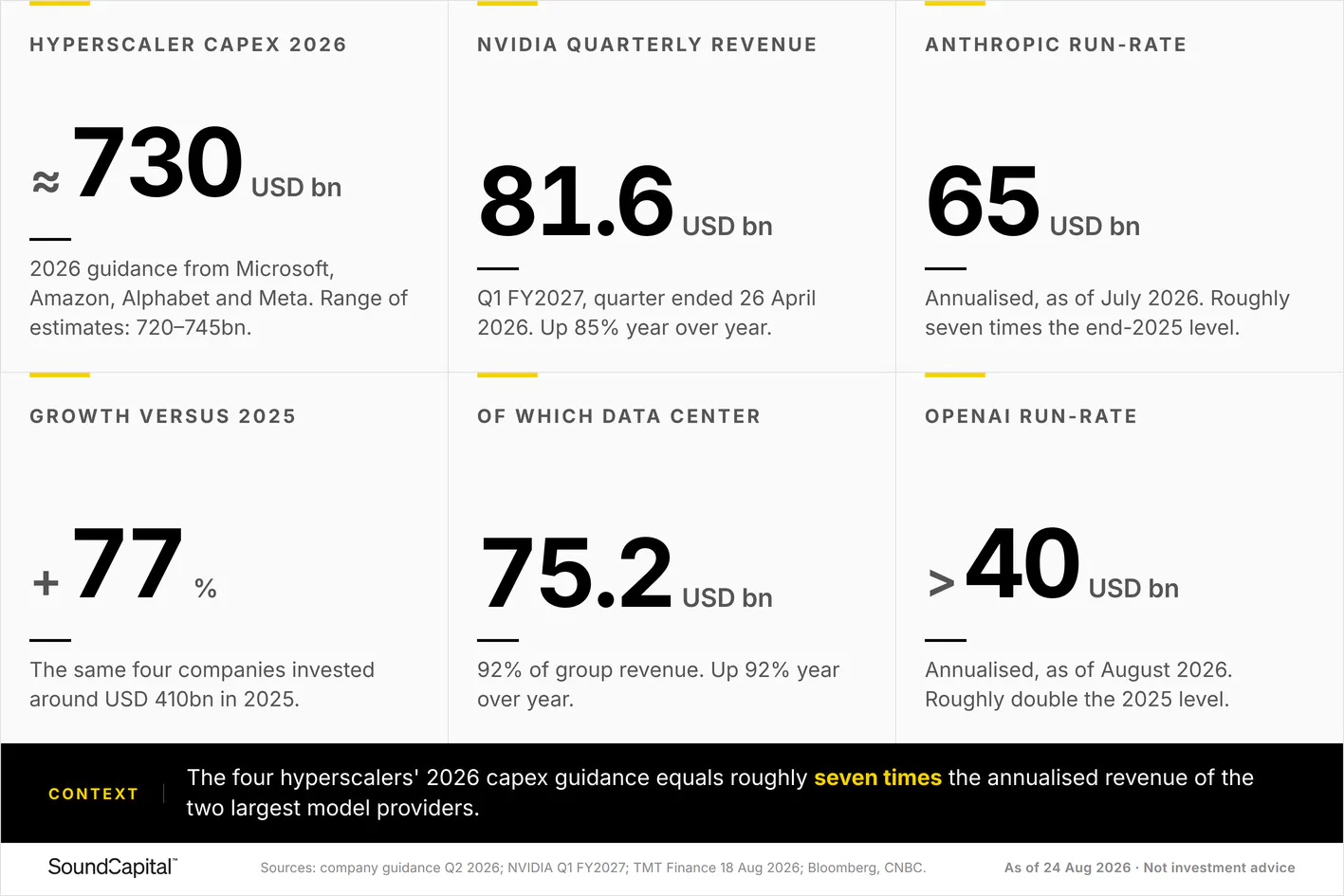
Technological change works in two directions. Over the long term, productivity gains can strengthen growth and dampen price pressure. In the short term, however, the infrastructure build-out raises capital requirements and intensifies the competition for funding. Stronger growth can therefore justify higher real interest rates; at the same time, uncertainty about the course and the return of the investment cycle adds to the term premium.
SoundCapital’s Positioning
Our positioning remains unchanged. The equity allocation is neutral and partly hedged. Structural earnings growth in the technology sector, together with the substantial investment flowing into AI, energy and infrastructure, continues to argue for a constructive equity environment. Euphoric positioning, concentration risk and elevated interest rate volatility nonetheless call for disciplined risk management.
In emerging market equities we maintain our overweight. The MSCI Emerging Markets index is now heavily shaped by a small number of Asian semiconductor names: TSMC, Samsung Electronics and SK Hynix together account for around 28 percent of the index. We therefore favour a broader selection within the emerging markets. Attractive valuations, increasing capital flows and the combination of technological integration, industrial catch-up and growing domestic demand remain compelling long-term arguments for the asset class.
In fixed income we continue to prefer high-quality corporate bonds over government bonds and avoid the high-yield segment. At the long end, however, we remain selective, given the higher term premium and the heavy volume of issuance. Gold remains rightly overweight, particularly at a time of official intervention.
Conclusion
The rise in long-term interest rates is not a pure inflation phenomenon. It marks a new market phase in which high public debt, large private capital needs and technological investment cycles all compete for funding at the same time.
What makes this interesting is the following: in our view, the major AI themes remain attractive in both the United States and Europe. Higher bond yields are, in principle, a headwind for equities. What matters, though, is why yields are rising. Part of the increase reflects not only concern about public debt but also real growth opportunities: large companies are investing heavily in the themes of the future and are therefore emerging—much like governments—as significant claimants on capital.
For USD investors, the higher level of yields once again offers attractive running income. Whether that becomes a durable opportunity depends on whether official measures can win back the market’s confidence. Until then, the price of uncertainty will remain visible in the yields of long-dated bonds.
Appendix & Disclaimer
SoundInsights is the central tool for our investment allocation. We use it to systematically and consistently assess the aspects that are relevant to the development of the financial markets. As a result, our clients can rely on a rational and anti-cyclical implementation of our investment decisions.
- Focusing on the essentials
Interest rate level, risk premium, valuation, economic development, investor sentiment and positioning. These are the decisive factors for success on the financial markets, especially in turbulent times when the temptation to react irrationally to the headlines is particularly strong. - Comparability over time and place
The factors mentioned above are equally relevant for all markets and at all times. This is the result of a strict «backtesting» process that continues into the future. - Cumulating our investment experience
Our strength lies in the many years of experience of our partners and principals. It is precisely this experience that we summarize and make it applicable with SoundInsights. - Transparency
Thanks to our monthly publication, our clients always know where we stand in the investment cycle and how we expect the financial markets to develop.
This document has been prepared by Sound Capital Ltd ("SoundCapital") for information and marketing purposes and is intended for the recipient. The information contained herein has been prepared with due care and is based on sources considered reliable by SoundCapital. However, no representation or warranty is made as to the accuracy, completeness or reliability of such information. To the extent permitted by applicable law, SoundCapital accepts no liability for any loss or damage arising from the use of this information. This document does not constitute an offer or solicitation to buy or sell any financial instrument or to enter into any transaction, nor does it constitute investment, legal, tax or other advice or a personal recommendation. It should not be relied upon as the sole basis for any investment decision. Recipients should make their own assessment of the information, taking into account their individual circumstances, investment objectives, financial situation and needs, as well as the relevant legal, regulatory and tax implications, and seek independent professional advice where appropriate. Investments involve risks and may result in the partial or total loss of the invested capital. The value of investments and any income derived from them may fluctuate and are not guaranteed. Past performance is not a reliable indicator of future results. Forecasts, projections, estimates, target returns and other forward-looking statements are based on assumptions that may change and likewise do not provide a reliable basis for assessing future performance. Actual results may differ materially from the expectations expressed or implied by such forward-looking information. Unless otherwise stated, the information contained in this document is provided as of the date indicated. It may be changed at any time without prior notice. SoundCapital is under no obligation to update or revise such information. This document is not intended for any person or entity in any jurisdiction where its distribution, publication or use would be contrary to applicable laws or regulations or would subject SoundCapital to any registration or other requirement. This document may not be reproduced, distributed or transmitted, in whole or in part, without the prior written consent of SoundCapital.
© 2026 Sound Capital Ltd. All rights reserved.
Datasource: Bloomberg, BofA ML Research
SC — INSIGHT
SoundInsights™
SC — INSIGHTN°48
SC — INSIGHTN°47

SC — WWO01
PMA
What we offer
Portfolio Management
Asset management with a vision for long-term investment success
SC — WWO02
INA
What we offer
Investment Advisory
Solid advice for better-informed investment decisions
SC — WWO03
WMS
What we offer
Wealth Management Services
Comprehensive wealth management services for your financial future